Insight
Proper Hydraulic Cylinder Storage: How to Protect Your Investment

Hydraulic cylinders are precision-engineered, high-value components – and they can deteriorate badly in storage if they aren't prepared and stored correctly. Corrosion, contamination, and premature seal damage are the three big risks, and all three are avoidable.
Whether you're holding spare cylinders as critical inventory or setting equipment aside between projects, knowing how to store hydraulic cylinders correctly will keep them in as-new condition and ready to install. This article covers the key measures to take before and during storage, plus what to do when ideal conditions aren't possible.
Key Storage Measures
Store indoors
Keep cylinders in a clean, dry indoor area away from direct sunlight and extreme temperature swings. UV exposure degrades seals and exposed surfaces over time, while temperature fluctuations cause condensation — and condensation means corrosion. A stable indoor environment eliminates both risks.
Store upright, fully retracted, rod-end up on a purpose-made rack
Cylinders should be stored vertically at an approximate 74° angle, fully retracted, with the rod end facing up, on a rack purpose-made for the job. Upright storage keeps the wear rings and seals evenly loaded — avoiding the gradual one-sided deformation that long-term horizontal storage can cause, particularly on large, heavy cylinders. Full retraction keeps the rod's chrome surface protected inside the cylinder, minimising the area exposed to the atmosphere.
Use restraining bands or chains
Secure each cylinder to the rack with restraining bands or chains to prevent it from tipping. A falling cylinder is a serious safety hazard to your staff and will almost certainly damage the cylinder itself.
Coat internal surfaces with hydraulic oil
Before storage, ensure the internal surfaces of the cylinder are coated with a light residue of hydraulic oil. This thin protective film shields the honed tube surface and internal components from oxidation.
Make sure the air inside the cylinder is dry
The air sealed inside the cylinder must be dry. Moisture-laden air causes spot rusting and pitting on the tube surface, which shortens the service life of the piston seals and, ultimately, the tube itself. To get this right, drain the hydraulic oil in a low-humidity environment and plug the oil ports immediately afterwards.
Plug all oil ports
Plug every port with steel plugs and gaskets to prevent moisture from entering the cylinder. Steel plugs provide far better sealing integrity than plastic ones, which are easily dislodged and don't seal reliably.
Apply anti-rust oil or grease to all exposed steel
Ensure anti-rust oil or grease is applied to all exposed steel — eyes, clevises, bushes, and bearings. Any bare steel left unprotected will begin to rust, even indoors.
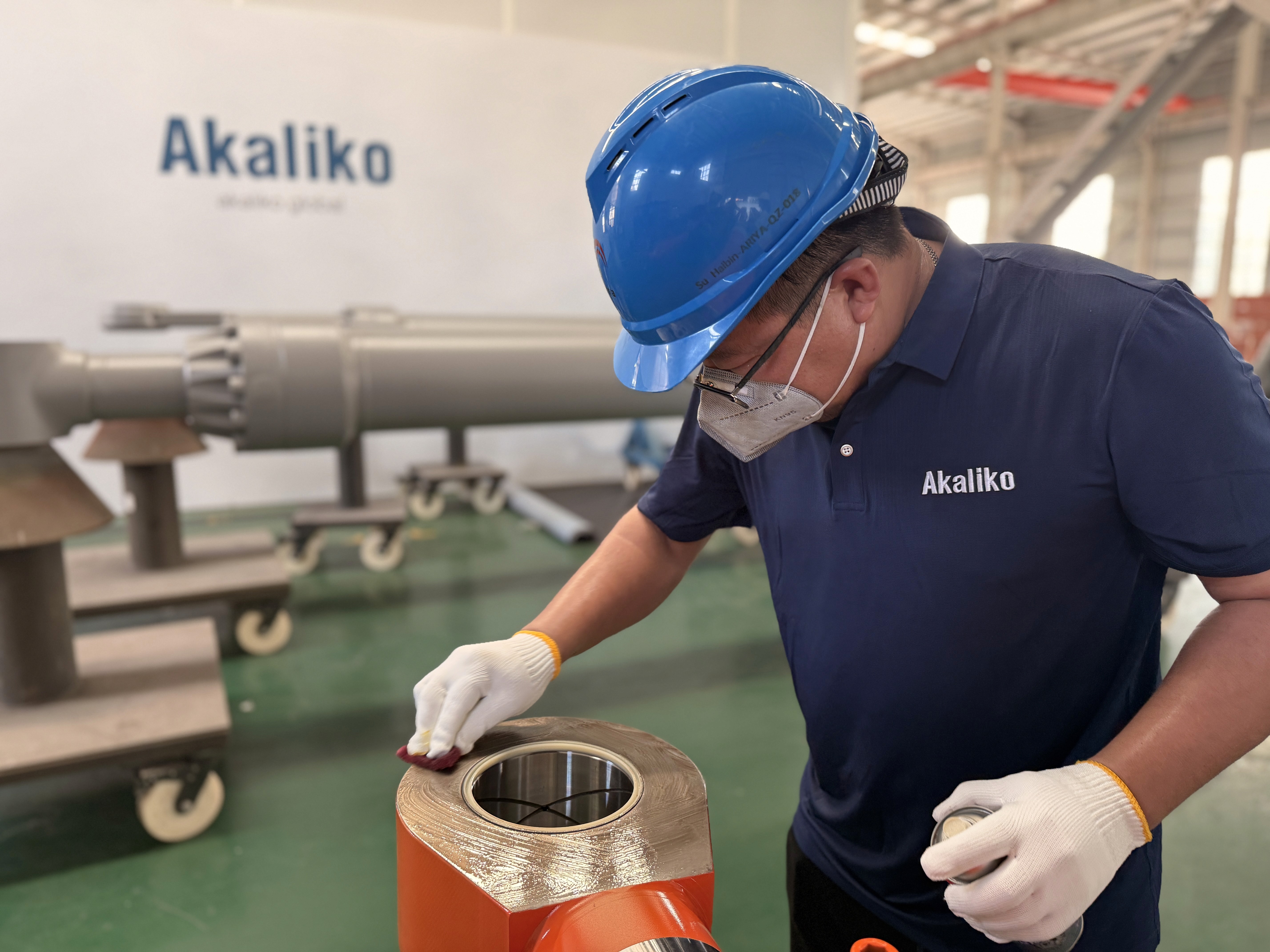
Wrap exposed chrome in anti-corrosion tape
Any chrome that remains exposed — such as a section of the rod — should be wrapped in anti-corrosion tape. The chrome plating on the rod is critical to seal life, and even minor pitting from corrosion can destroy rod seals once the cylinder returns to service. Make sure the rod is fully retracted before applying the tape.
When Ideal Storage Isn't Possible
If horizontal storage is unavoidable
Support the cylinder properly along its full length and restrain it against movement. For most cylinders, this is sufficient — the internal wear rings are designed to carry static loads, and a well-supported cylinder can sit horizontally for months without issue.
Large, heavy cylinders are the exception. Under prolonged one-sided loading, the wear rings and seals can gradually take a "set" — a permanent deformation that compromises seal performance once the cylinder returns to service. For these cylinders, rotate 90 degrees once every two weeks so the load point keeps moving. It's a two-minute job that's cheap insurance on a high-value component.
If outdoor storage is unavoidable
Wrap the cylinder in VCI (volatile corrosion inhibitor) film. VCI packaging protects against UV, moisture, and contamination when indoor storage simply isn't an option. It's not a substitute for proper indoor storage, but it dramatically reduces the risks.
Storing cylinders filled with hydraulic oil
For heavy, high-value, or high-pressure cylinders, storage filled with hydraulic oil is worth considering — weigh it up against the cylinder's value and the expected storage duration. If you do fill a cylinder with oil, make sure it's fully retracted and fill through the rod-end port to avoid pressure intensification damage. Be aware that oil-filled cylinders must be kept away from heat: thermal expansion of the oil can push internal pressure above the cylinder's working pressure, causing seal failure and creating a serious hazard for anyone opening a pressurised port.
Conclusion
Proper storage is a small investment of time that protects a much larger investment in your hydraulic cylinders. Store them indoors, upright and fully retracted on a purpose-made rack, keep the internals oiled and dry, plug the ports, protect exposed steel and chrome, and restrain everything securely — and your cylinders will come out of storage in the same condition they went in.
At Akaliko, we apply these same practices to every cylinder we store and package, so your order arrives protected and ready for service. We encourage all our customers to carry these practices through to their own storage facilities.
Browse our range of hydraulic cylinders on the Akaliko Online Store